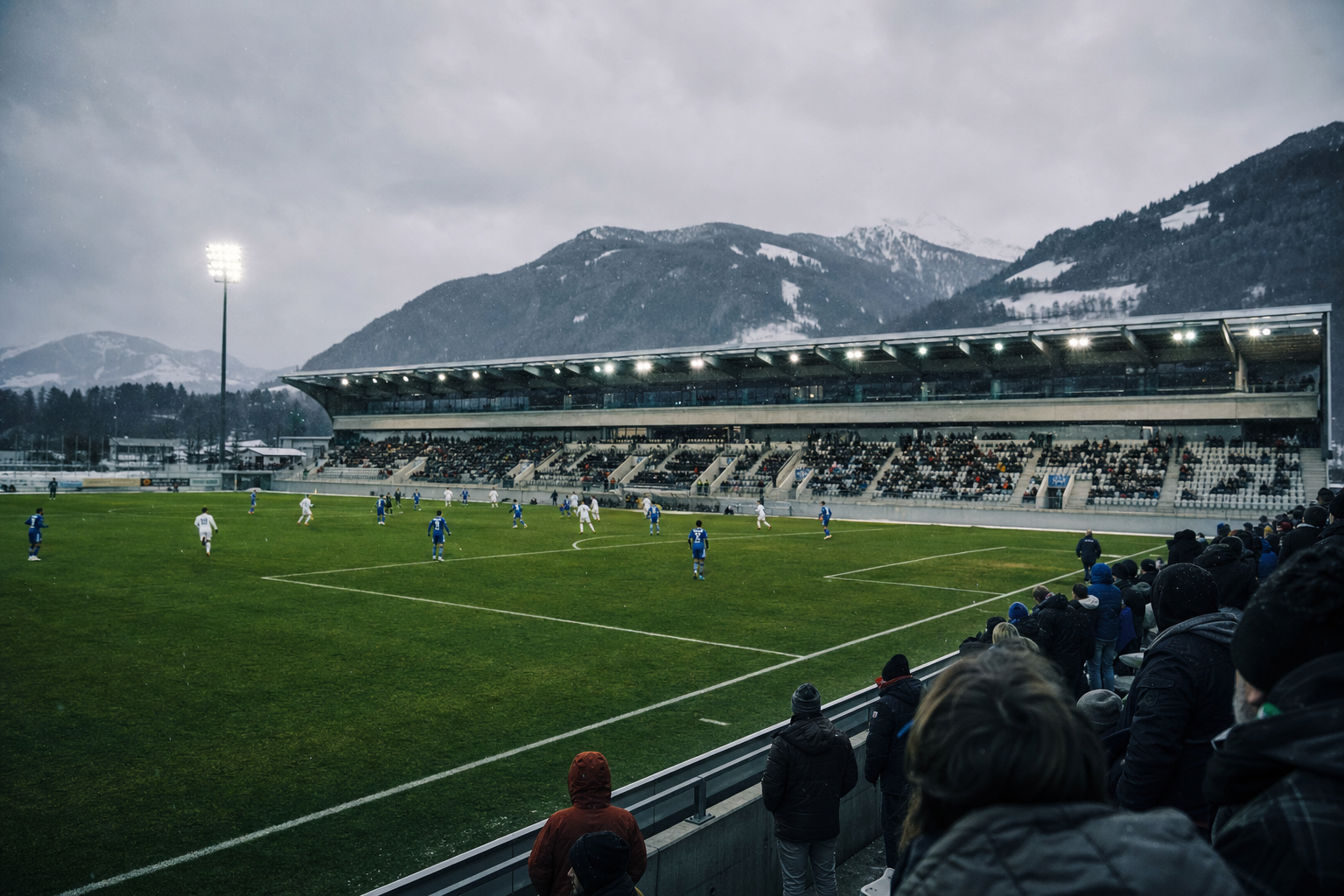
Rapid Wien vs FC Slovácko — Winter Friendly 2018
Editorial analysis of the January 2018 winter preparation match between Rapid Wien and FC Slovácko, and Rapid's approach under Goran Djuricin.
The January 2018 encounter between Rapid Wien and FC Slovácko took place within the context of winter preparation ahead of the resumption of Austrian Bundesliga competition. For Austrian football's most historically significant club, the mid-season break served as both a physical recovery period and an opportunity to assess tactical shape before the second half of a challenging domestic campaign.
Rapid Wien: Historical Significance in Austrian Football
SK Rapid Wien is the most successful club in the history of Austrian football — a distinction that carries genuine weight in a country whose footballing tradition extends back to the sport's central European origins in the late nineteenth century. Founded in 1899 in Vienna's working-class Hütteldorf district, Rapid have won the Austrian Bundesliga championship more times than any other club, with a record that spans over a century of domestic competition.
The club's significance in the broader history of European football extends beyond Austrian borders. Rapid Wien were the first club from outside the United Kingdom to win a national championship in a country that had no professional league at the time of their founding, and during the interwar period they were one of the most respected clubs in continental Europe. The so-called "Viennese School" of football — a technically sophisticated, combination-based style that influenced European football before and after the Second World War — drew many of its most celebrated practitioners from Rapid's playing and coaching traditions.
In the modern era, Rapid's competitive context is defined by the Austrian Bundesliga's position as a mid-tier European league. The club competes regularly in UEFA Europa League qualifying and occasionally reaches the group stage, providing a measure of continental competition that sustains the club's European identity while acknowledging the significant financial gulf between the Austrian league and the major European competitions.
The 2017–18 Austrian Bundesliga Season
Rapid Wien entered the second half of the 2017–18 Austrian Bundesliga season under manager Goran Djuricin, who had been in charge at the club since late 2016 following the dismissal of his predecessor. The campaign had produced mixed results — periods of competitive football interrupted by inconsistent performances that prevented the side from mounting a sustained title challenge against Red Bull Salzburg, the financially dominant force in Austrian club football since their transformation under Red Bull's investment from the mid-2000s onwards.
The structural challenge facing Rapid and all other Austrian Bundesliga clubs is the financial disparity between Salzburg and the rest of the competition. Red Bull's investment in the club has produced a sporting infrastructure — youth academy, tactical coaching, and transfer budget — that categorically exceeds what any other Austrian club can offer. For Rapid, the realistic competitive target in the Austrian league is a strong second-place finish and qualification for European competition, rather than a direct championship challenge. This context shaped the preparation objectives for the winter break.
FC Slovácko: Czech Opposition
FC Slovácko, based in Uherské Hradiště in the Moravian region of the Czech Republic, were competing in the Czech top flight during the 2017–18 season. The club represents a category of central European football institution — financially modest, technically sound, tactically organised — that provides useful competitive reference for Austrian clubs during mid-season preparation.
The Czech top flight, known as the HET liga at the time, operates at a comparable level to the Austrian Bundesliga within the UEFA coefficient rankings. Czech clubs have historically been competitive in UEFA competition, particularly in the Europa League qualifying rounds, and a Czech opponent provides Austrian sides with a realistic gauge of where their tactical organisation stands relative to their central European peers.
Tactical Observations from the Winter Fixture
Winter preparation matches serve a specific purpose in Austrian and central European football culture: they are not competitive events in the conventional sense, but structured opportunities for managers to assess fitness levels, test tactical variants, and give playing time to squad members who have been peripheral during the competitive season. The results of such fixtures carry no formal significance, and the tactical information they reveal is necessarily qualified by the non-competitive context.
For Rapid Wien, the match against Slovácko provided an opportunity to work on the structural elements of Djuricin's preferred system. A base formation of 4-2-3-1 or 4-3-3 was common in Austrian football at this period, and Rapid's tactical identity under Djuricin reflected these conventions — organised defensively from a mid-block structure, with transitions toward attack through the central midfielder and the attacking third.
The winter preparation context also allowed for experimentation with personnel in positions where squad competition was active. Fringe players — those who had not established themselves in the first-choice lineup during the autumn campaign — received extended playing time, providing Djuricin with additional information for the selection decisions that would define the club's second-half campaign.
Winter Football in Central Europe
The mid-winter break is a structural feature of football leagues across central and eastern Europe that distinguishes them from the winter-through winter model of the Premier League and other leagues that continue without an extended pause. Austrian, German, Czech, Polish, and Hungarian leagues all schedule a break typically from late November or December through mid-February, resuming competition in the early spring as ground conditions improve and daylight hours extend.
The break produces a concentration of friendly matches in January and early February, as clubs in warmer southern locations — particularly in Spain, Austria's own warmer training facilities, and Turkey — host winter training camps with competitive fixtures against similarly prepared opponents. These camps and their associated matches are a well-established feature of central European football's preparation calendar, forming part of the seasonal rhythm that distinguishes these leagues from their western European counterparts.
Rapid's Second-Half Campaign and Later Developments
The resumption of the Austrian Bundesliga following the winter break presented Rapid with the task of converting a broadly satisfactory autumn campaign into a strong second-half finish. The club's Europa League aspirations — consistent participation in European qualifying remains a core commercial and sporting objective — provided additional motivation for maintaining competitive levels through the spring.
Djuricin's tenure at Rapid would continue into the following season, though the managerial landscape at Austrian clubs — where coaching changes are relatively frequent in response to competitive pressure — meant that the squads and systems documented in pre-season and winter preparation fixtures are often superseded by subsequent tactical and personnel changes within the same season.
For Austrian football enthusiasts and those following central European club football's tactical development, winter preparation matches like this fixture provide a useful contextual snapshot — not of competitive performance, but of the tactical thinking and squad management decisions that shape how clubs approach the second half of the campaign.
For broader context on European club competition, see the UEFA Europa League archive, which covers the continental competition in which Austrian clubs like Rapid Wien regularly participate.
Frequently Asked Questions
What kind of match was Rapid Wien against FC Slovácko?
Why does the archive cover a friendly?
What is Rapid Wien's standing in Austrian football?
Why do central European clubs play winter preparation matches?
Football Replay Editorial
Updated May 2, 2026