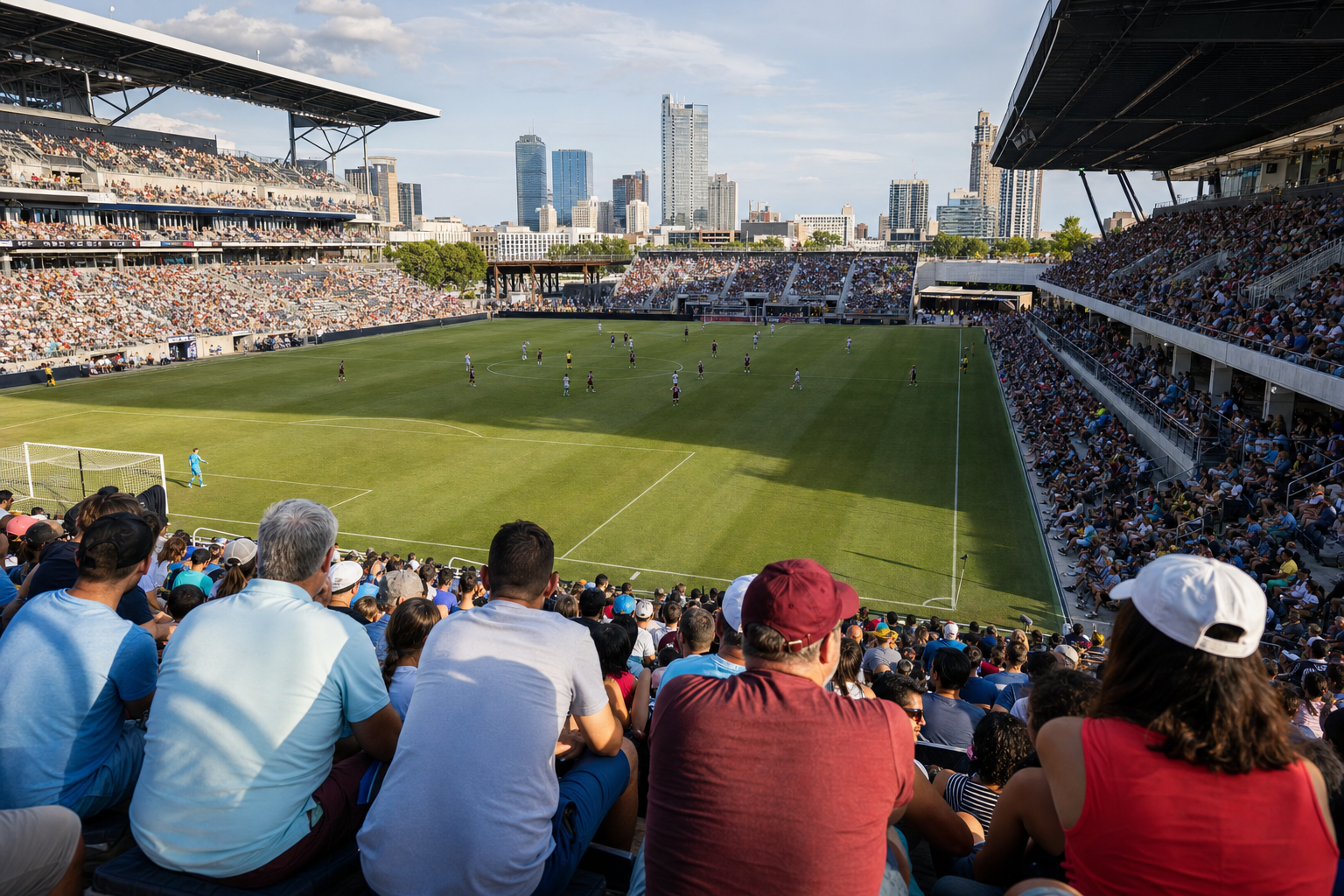
Major League Soccer represents one of the most remarkable structural experiments in the history of professional sport. Founded in 1993 and commencing play in 1996 as a condition of the United States hosting the 1994 FIFA World Cup, MLS was designed from the outset as a top-division American professional football league capable of long-term commercial viability in a market historically dominated by the four major North American sports leagues.
The league's original ten-club structure — which included charter franchises such as D.C. United, Los Angeles Galaxy, Columbus Crew, and the New England Revolution — has expanded dramatically to encompass more than thirty clubs across the United States and Canada. This expansion has transformed MLS from a regional curiosity into a genuinely national league with significant commercial infrastructure, competitive youth academies, and a growing capacity to retain and attract players of genuine international standard.
The early years of MLS were characterised by a deliberate accommodation of the American sporting market. The league operated a single-entity ownership model, controlled player contracts centrally, and implemented a number of rule modifications — including the tiebreaking shootout in the league's first two seasons — that distinguished it from the global norm. These decisions, while commercially pragmatic, drew sustained criticism from football purists and contributed to an early perception of MLS as a second-tier competition relative to its international counterparts.
Tactical Development: From Entertainment to Sophistication
The tactical history of MLS divides naturally into three distinct phases. The founding era from 1996 through the early 2000s was defined by a product designed for accessibility: high-scoring matches, minimal tactical complexity, and an emphasis on individual showmanship. Early MLS imported a significant number of veteran European and South American players whose careers elsewhere had concluded, resulting in a league whose tactical tempo did not match its nominal billing as first-division football.
The second phase, roughly spanning the mid-2000s through the mid-2010s, coincided with the introduction of the Designated Player Rule in 2007 — colloquially known as the "Beckham Rule" after the league's most celebrated signing under its provisions. The DP Rule permitted clubs to sign players above the league's salary cap, and its effects were transformative. The arrival of David Beckham at the LA Galaxy in 2007 attracted global media attention to MLS in a manner that no previous initiative had achieved, and a string of high-profile Designated Player signings over subsequent seasons — Thierry Henry, Kaká, Frank Lampard, Steven Gerrard, and Andrea Pirlo among them — substantially raised the competitive level and media profile of the league.
The current phase of MLS development, beginning approximately in 2018 and accelerating through the early 2020s, is defined by a shift toward younger talent and genuine tactical sophistication. The league's improved youth academy infrastructure — driven in part by the MLS NextPro development league — has produced a first generation of significant American footballers who have developed substantially within the MLS environment before moving to European leagues. This pipeline, coupled with more ambitious tactical coaching imported from Europe and South America, has produced a recognisably more demanding product than the league offered in its first decade.
The MLS Cup: Competition Structure and Records
The primary competition within MLS is the MLS Cup Playoffs, a postseason knockout tournament that determines the league champion independently of regular-season standing. This structural choice — derived from North American sports conventions — distinguishes MLS from virtually every other first-division football league globally, where end-of-season league table position alone determines the champion.
The most successful clubs in MLS Cup history are the Los Angeles Galaxy, with five championships, and D.C. United, Columbus Crew, and Seattle Sounders, each with multiple titles. The Supporters' Shield, awarded to the club with the best regular-season record, carries separate prestige and has occasionally been won by clubs who have subsequently failed to convert regular-season dominance into MLS Cup success — a structural tension inherent in the playoff model.
The Lamar Hunt U.S. Open Cup, the oldest ongoing national football competition in the United States (dating to 1914), provides a secondary competitive strand for MLS clubs alongside lower-division sides and amateur teams. MLS clubs have dominated the Open Cup in recent decades, but the occasional upset by lower-division opponents represents one of the competition's most valued traditions.
Expansion and Geographical Reach
The league's expansion history is central to any comprehensive understanding of MLS. Beginning with ten clubs in 1996, MLS contracted to ten teams in 2002 following the folding of the Tampa Bay Mutiny and Miami Fusion — a financial crisis that tested the league's viability and prompted significant structural reform. The subsequent expansion was more deliberate and commercially grounded, with new clubs required to demonstrate market support through pre-season season-ticket drives and commit to soccer-specific stadium construction.
The entry of Toronto FC in 2007 marked the beginning of the league's Canadian presence, subsequently joined by Vancouver Whitecaps and Montreal Impact (now CF Montréal). The Canadian clubs occupy a structurally hybrid position — they participate in a predominantly American league while operating within Canadian Football Association jurisdiction for international competition purposes.
The league's most ambitious expansion phase involved the entry of large-market clubs including Atlanta United (2017), Los Angeles FC (2018), and Inter Miami CF (2020). These clubs brought substantial investment, high-profile signings, and in the case of Atlanta United and Los Angeles FC, immediate competitive success. The 2023 arrival of Lionel Messi at Inter Miami CF generated the most significant global media interest in any MLS transaction and produced a sustained period of commercial growth for the league as a whole.
The Messi Effect and Contemporary MLS
The signing of Lionel Messi by Inter Miami in July 2023 represented a watershed moment for MLS's global profile. Messi's arrival transformed Inter Miami from a mid-table struggling club into one of the most commercially significant franchises in global club football, at least in terms of media attention and merchandise sales. The tactical impact was immediate and substantial: Messi's 11 goals and 12 assists in 14 regular-season and Leagues Cup appearances in 2023 single-handedly elevated Inter Miami's attack from below-average to the most productive in the Eastern Conference.
Beyond the immediate on-field contribution, Messi's presence demonstrated MLS's capacity to operate as a viable endpoint for elite players seeking reduced competitive pressure while maintaining a high quality of life and commercial earnings in their later careers. This positioning — as the world's most attractive final chapter league — has been articulated as a strategic commercial goal by MLS Commissioner Don Garber, and Messi's arrival was widely interpreted as a validation of that strategy.
MLS in the World Cup Context
The 2026 FIFA World Cup, co-hosted by the United States, Mexico, and Canada, represents the most significant external event in MLS's recent history. The league's commercial infrastructure, stadium network, and talent pipeline have all been developed partly with the 2026 tournament in mind. Several MLS venues will serve as World Cup match venues, and the tournament is widely expected to accelerate the league's commercial trajectory in the years following the event.
The United States men's national team, drawing extensively on MLS-developed players, has entered the 2026 cycle with genuine optimism following its qualification from the 2022 World Cup's Group of Death and the emergence of a generation of European-based American footballers — including Christian Pulisic, Weston McKennie, Giovanni Reyna, and Josh Sargent — many of whom began their development in MLS academies.
Attending and Following MLS
MLS attendance figures reflect the league's geographic and demographic diversity. Clubs in large urban markets with established soccer-specific stadiums — notably Atlanta United's Mercedes-Benz Stadium, Seattle Sounders' Lumen Field, and Portland Timbers' Providence Park — consistently achieve or exceed 50,000 supporters per match. Smaller market clubs operate in soccer-specific stadiums of 18,000 to 22,000 capacity and generate strong crowd densities relative to the North American professional sports average.
The supporter culture of MLS clubs, particularly in the Pacific Northwest and in cities with large immigrant communities with established football traditions, draws explicit comparison to European ultras traditions. The organised supporter groups of the Seattle Sounders, Portland Timbers, and Atlanta United in particular have developed standing sections, choreographed displays, and song culture that would be familiar to any European football supporter.