Football Replay: a documentary archive of football history and match analysis
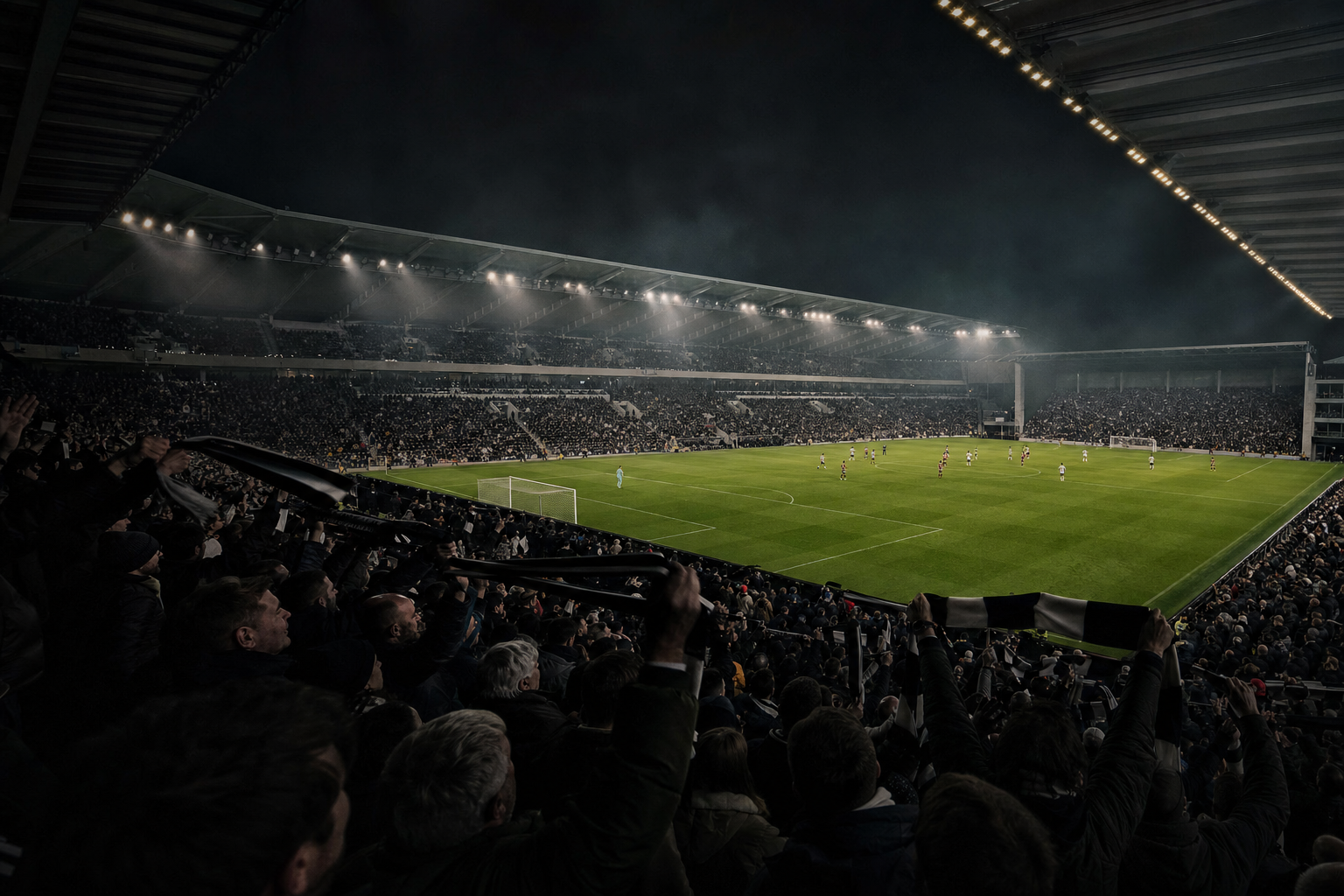
Arsenal vs Tottenham Hotspur
Thirty-four matches into the 2003–04 season, Wenger's Arsenal remained unbeaten. The North London derby at Highbury ended 2–2 — a result that kept the Invincibles record intact with four fixtures remaining.
Explore Premier League Archive →The Football Replay Archive
Football Replay documents the history of association football. Since the sport's earliest recorded competitions in the late nineteenth century through to the present day, football has accumulated a body of tactical, historical, and cultural significance that rewards serious reference work. This archive provides match-by-match documentation across the game's most significant leagues and competitions.
The archive covers the full spectrum of professional football, from the domestic pyramid of the English Premier League to the vast continental theatre of UEFA's Champions League and Europa League. The Major League Soccer competition in the United States occupies a dedicated section, reflecting the league's growing significance in the global game since its founding in 1993. European leagues including Spain's La Liga, Germany's Bundesliga, Italy's Serie A, and France's Ligue 1 are documented with equal editorial rigour.
Each match entry in the archive draws on publicly available documentary sources, post-match reporting, and tactical analysis to provide the most accurate picture of how individual contests unfolded. The archive documents football's tactical evolution across decades of professional competition — match by match, season by season.
Match Analysis as Historical Record
The decision to centre this archive around tactical documentation reflects a long-held conviction among football scholars and analysts: that the history of the game is, at its core, a history of tactical ideas. The development from the early 2-3-5 pyramid formation through the revolutionary Hungarian deep-lying centre-forward system of the early 1950s, the total football of the Ajax and Netherlands sides of the 1970s, and the pressing movements codified by Ralf Rangnick and Jürgen Klopp in the twenty-first century all represent decisive moments in this ongoing tactical conversation.
The archive documents these shifts not as abstract theory but as they materialised in specific matches. The 1953 Wembley encounter between England and Hungary — which ended 6-3 in favour of the visitors — is perhaps the most cited single match in the history of tactical football literature. The archive's treatment of such landmark encounters attempts to ground the tactical analysis in the specifics of the match itself: personnel decisions, in-game adjustments, and the contextual pressures that shaped each manager's approach.
Contemporary match documentation follows the same principles. A Premier League fixture between Manchester City and Liverpool in a title-deciding week demands the same quality of editorial attention as a historic European final. The archive makes no hierarchy between eras — a 2016 MLS Cup match receives the same structural treatment as a 1999 UEFA Champions League Final. Football history is continuous, and the archive reflects that continuity.
Editorial Standards and Neutral Voice
All content within Football Replay adheres to a strict editorial standard of accuracy, neutrality, and sourcing discipline. Match reports draw only on verifiable documentary sources. Where factual disputes exist in the historical record — questions of goalscoring attribution, official attendance figures, or disputed disciplinary decisions — the archive acknowledges the dispute rather than imposing a single narrative.
The editorial voice across all sections of the archive is deliberately third-person and neutral. Football carries enormous cultural and political weight, and the archive maintains a clear distance from partisan affiliation. Club rivalries, national football associations, and continental governing bodies are covered with equal rigour and without editorial bias toward any particular footballing tradition or geography.
Coverage Scope: Competitions and Eras
The archive's coverage is organised by competition first and chronology second. Each major league or cup competition has its own dedicated section, within which individual seasons and matches are chronologically ordered. This structure allows researchers and football enthusiasts to navigate either by competition — following a single league's evolution across multiple decades — or by browsing within a specific season or period of interest.
The depth of coverage varies by era and competition. The archive's Premier League documentation is the most comprehensive, reflecting both the competition's global reach since its formation in 1992 and the relative abundance of publicly available documentary sources. Earlier periods of English football, including the Football League era from 1888 onwards, receive structural coverage with reduced match-by-match granularity. Continental competitions, particularly the European Cup and its successor competitions from 1955 onwards, are extensively documented at the knockout stages.
Major League Soccer coverage begins with the league's inaugural 1996 season and extends to the present day, reflecting the archive's conviction that the American game deserves the same documentary rigour applied to its European counterparts. The archive takes particular interest in how MLS has developed tactically from its initial product — designed to be accessible and family-oriented — toward a more technically demanding league capable of retaining elite international talent.
What Each Match Page Contains
Revisiting a match through the Football Replay archive is a different experience from watching video: the emphasis is on understanding what happened and why. Each full match page documents how the contest unfolded through written analysis rather than footage — a format that allows for deliberate attention to the detail that moving images compress or skip over.
Every documented match includes confirmed starting line-ups for both sides with manager names, the tactical formation as deployed rather than nominal, and where available the substitutions and the logic behind them. The narrative moves through pre-match context, key turning points — the goal that changed the game's psychology, the tactical adjustment that shifted the balance, the individual moment that defined the occasion — before arriving at a legacy section assessing how the match is now understood within its competition's history.
Navigation within Football Replay is structured to serve both the casual fan seeking context on a specific match and the more systematic researcher tracing a league's tactical development across decades. The league hub pages serve as editorial entry points; the match archive organises individual matches chronologically within each competition.